
AAC Blocks Myths vs Reality: Strength, Cost, Sustainability and More
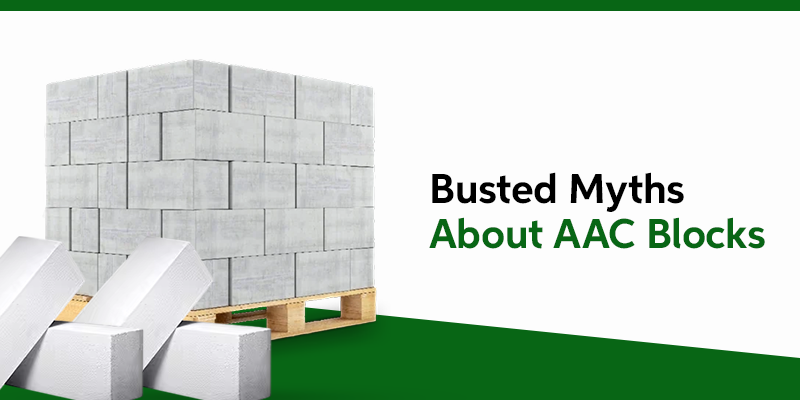
AAC blocks are gaining popularity across various construction projects, but many people still hold misconceptions about how they work, their strength, and whether they are worth the investment. These myths about AAC blocks often create confusion for builders, contractors and homeowners.
This guide clears the most common misconceptions about AAC blocks, explains what is true and what is not, and helps you make better decisions before choosing AAC blocks for your building.
Why do people believe AAC blocks aren’t strong enough?
Myth: Lightweight means weak
AAC blocks are lighter than traditional bricks. Because of this, some people assume that AAC blocks cannot take load or are not suitable for big structures. This belief comes from comparing weight instead of understanding how the material performs.
Reality: AAC blocks have approved compressive strength
AAC blocks go through strict testing before reaching any site. Reputable AAC blocks manufacturers share strength grades, density values, and test reports. These clearly show that AAC can support multi-storey buildings without any structural risk.
AAC blocks are light because they contain tiny air pockets. These pockets help with insulation and handling, not strength reduction. In fact, the consistency in size and finish increases overall wall stability.
AAC blocks are tested under strict standards. Good-quality AAC blocks come with:
- High compressive strength
- Consistent density
- Proper strength grades
- Good bonding with mortar
Strength grades clearly show that AAC can support multi-storey buildings without issues. The lightweight nature does not reduce strength; it only makes handling easier.
What builders should verify?
Before buying AAC blocks, always check:
- Density
- Strength grade
- Lab test report
- Manufacturer certificate
- On-site quality checks like drop test
A trusted AAC blocks manufacturer or AAC blocks supplier will always provide these details without hesitation.
Is it true that AAC blocks cost more than traditional bricks?
Myth: AAC blocks are expensive because the price per piece is higher
AAC blocks generally cost more per piece compared to traditional bricks. This creates the AAC blocks cost higher myth, leading people to believe they increase the overall project cost.
Reality: AAC reduces total construction cost
When you consider the full building cost, AAC blocks help save money. This happens because:
- Bigger block size reduces mortar use
- Faster installation lowers labour cost
- Lightweight structure reduces steel and concrete
- Better insulation cuts power bills
- Less wastage during handling
When you calculate total cost, AAC blocks offer strong economic benefit over time.
How to check real cost for your project?
Include these in your calculation:
- Cost of AAC blocks
- Cost of block jointing mortar
- Labour cost
- RCC savings
- Speed of construction
- Energy savings over building life
This gives a clear view and removes the confusion created by the price-per-block comparison.
Also Read: AAC Block vs Red Brick
Do AAC blocks deteriorate faster or have a short lifespan?
Myth: AAC blocks cannot last long and may weaken in a few years
AAC is made from cement, fly ash, lime, and aluminium powder—all stable materials that do not decay. The pores inside the block are uniform, controlled, and part of the material design. They do not harm strength or lifespan.
AAC blocks offer:
- Fire resistance
- Termite resistance
- Insect resistance
- Non-corrosive properties
- Dimensional stability
These features make AAC blocks highly durable. Buildings made with AAC last as long as RCC structures.
Maintenance tips to keep AAC strong
Proper wall care increases durability:
- Use block jointing mortar for strong bonding
- Use Ready mix plaster to seal pores
- Apply waterproof coatings
- Ensure proper curing
- Avoid excessive loading on walls
These steps ensure your AAC walls remain strong for decades.
.Can AAC blocks work in all climates and weather conditions?
Myth: AAC blocks absorb too much water and cannot handle rain or humidity
Some believe AAC cannot perform well in wet or humid climates because of its porous surface.
Reality: AAC works well in all weather with proper finishing
AAC blocks need protection, just like any other wall material. When finished with plaster and coatings, AAC walls:
- Resist moisture
- Reduce surface cracks
- Handle temperature changes well
- Remain stable in rain or heat
Ready mix plaster is often used to protect AAC blocks and provide a long-lasting finish.
When extra precautions are needed?
Only a few situations need extra care, such as:
- High rainfall conditions
- Areas with prolonged moisture
- Zones needing high waterproofing
In these cases, stronger exterior coating and proper waterproofing keep the structure protected.
Are AAC blocks only for high-end or luxury buildings?
Myth: AAC is used only in premium projects
Because AAC blocks give a neat and modern look, many think they are used only in luxury buildings.
Reality: AAC is suitable for all building types
AAC is widely used in:
- Affordable homes
- Residential buildings
- Schools
- Offices
- Hospitals
- Shops
- Warehouses
- Industrial units
Its benefits—speed, savings and safety—make it suitable for all budgets.
Also Read: Benefits of Using AAC Blocks
Conclusion: Choosing AAC Blocks Without Falling for Myths
When you look at facts, AAC blocks come out as strong, cost-effective, durable and safe for almost every type of construction.
Here are the key truths to remember:
- Lightweight does not mean weak
- Total cost is lower, not higher
- AAC is durable and long-lasting
- Works in almost all climates
- Suitable for all building categories
Before you buy, check:
- Strength grade
- Density
- Test certificates
- Durability features
- Mortar and plaster requirements
Choosing a trusted AAC block manufacturer, AAC blocks supplier, block jointing mortar supplier, or ready mix plaster manufacturer helps you avoid confusion and get consistent quality.
Building with AAC blocks?
Talk to BigBloc Construction and get the right products for faster, safer, and cost-effective construction.
Also Read: How AAC Blocks Improve Energy Efficiency in Buildings?
FAQs
AAC blocks do not crack on their own. Cracks mostly happen because of mistakes during construction. Wrong plaster mix, poor curing, or fast drying can create surface cracks on any wall, even brick walls. When AAC blocks are installed with proper block jointing mortar and finished with good plaster, they stay stable and do not form cracks.
AAC blocks absorb some water because of their tiny air pockets, but this does not harm the structure. These air pockets help with insulation and temperature control. To stop surface dampness, you only need a proper plaster finish and a good exterior coating. Once coated, AAC performs well in all weather, including rainy or humid conditions.
No. AAC installation is simpler because the blocks are bigger and lighter than traditional bricks. Masons lift them easily, place fewer blocks per wall, and finish work faster. Since the surface is flat, plastering also becomes smoother. This reduces labour effort and saves time on every stage of wall construction.
Yes. AAC blocks are recommended for earthquake-prone regions. Their lightweight nature reduces the overall load on the building. A lighter building experiences less shaking during an earthquake. This lowers the stress on the structure and makes it safer. Engineers often prefer AAC for this reason in seismic zones.
AAC blocks work best with block jointing mortar. Traditional cement-sand mortar is thicker and creates uneven joints, which can affect alignment. Block jointing mortar is thin, easy to apply, and gives stronger bonding between blocks. It reduces cracks, improves finish, and helps walls stay durable for a long time.