
What Causes Dampness and Water Leakage in Buildings — Symptoms, Sources and Fixes
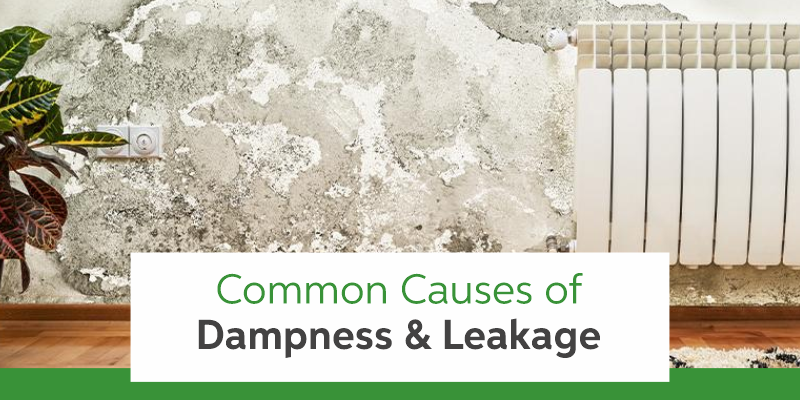
Dampness and water leakage are common problems in buildings across India. They usually develop slowly and remain unnoticed until paint starts peeling, walls smell damp, or mould appears.
Many people try to fix this by repainting or replastering. This does not work because dampness is not a surface issue. It is caused by water entering or remaining inside the wall structure.
To control dampness permanently, it is necessary to understand three things:
where the water is coming from, how it is entering the building, and what type of dampness it is.
Construction materials, wall systems, joints, and plaster quality also affect how moisture behaves inside a building. That is why materials like AAC Blocks, Block Jointing Mortar, and Ready Mix Plaster are important for long-term prevention.
What Are the Main Types of Dampness in Buildings?
Before starting any repair, one basic question must be answered:
What kind of dampness is present?
Most building-related dampness falls into three categories.
Rising Damp – When Water Moves Up From the Ground
Rising damp starts below the building. Water present in the soil moves upward through small pores in blocks, bricks, and mortar joints. This natural process is called capillary action.
It usually affects the lower part of the walls first. Damp patches appear close to the floor and slowly rise over time. These areas often stay damp even during dry weather.
White powder-like marks may appear on the wall surface. These are salts left behind when groundwater evaporates. Since the moisture source is below the wall, paint or plaster alone cannot solve this problem.
Penetrating Damp – When Water Enters From Outside or Inside
Penetrating damp is commonly referred to as water leakage.
It occurs when water enters through roofs, terraces, external walls, or plumbing pipes inside walls. Typical sources include cracked terrace slabs, damaged parapets, wall cracks, broken tiles, and leaking pipes near bathrooms or kitchens.
This type of damp usually appears as a patch on a specific wall or ceiling and becomes worse after rainfall. Over time, plaster weakens and paint peels. Unlike rising damp, the problem is limited to the area where water enters.
Condensation Damp – When Moist Air Turns Into Water
Condensation damp does not involve leakage.
It happens when warm, moist air inside a room comes into contact with cold wall or window surfaces. The moisture in the air turns into water droplets.
This is common in poorly ventilated bathrooms, kitchens, and bedrooms. Black mould in corners, damp smells, and water on windows are common signs. The problem is more noticeable during winter and monsoon seasons.
What Are the Most Common Causes of Water Leakage in Buildings?
Water leakage usually develops due to small faults that go unnoticed over time. Identifying these causes helps stop water at the source instead of repeatedly repairing surfaces.
Roof and Terrace Failures
(Blocked drains, cracked parapets, missing waterproofing)
Roofs and terraces receive direct rainwater. When drains are blocked, water collects on the surface. Standing water slowly enters through slab cracks, damaged parapets, or construction joints.
If waterproofing layers are missing or have failed due to age, water easily reaches the structure. This often results in ceiling leakage during monsoon.
Plumbing Leaks Inside Walls
(Faulty joints and fixtures in bathrooms and kitchens)
Plumbing leaks are difficult to detect early because pipes are concealed inside walls. Loose joints, old pipelines, and pressure near bathrooms and kitchens often cause slow leakage.
Moisture builds up inside the wall over time, leading to damp patches, peeling paint, and mould. This is often mistaken for surface dampness.
Poor External Wall Waterproofing
(Damaged render, tiles, and open joints)
External walls protect buildings from rain. Poor plaster quality, cracks, broken tiles, or open joints allow water to enter.
Once water penetrates the wall, it spreads internally and appears inside rooms. Internal repainting does not work unless external waterproofing is fixed.
Groundwater and Poor Site Drainage
(Rising damp and basement leakage)
In some buildings, moisture rises from the ground due to poor site drainage or high groundwater levels.
This leads to rising damp at ground-floor levels and leakage in basements. Without proper drainage, the structure remains under continuous moisture pressure.
You may also read: Why Do Cracks Appear on Walls and How to Fix Them?
What Short-Term Fixes Can Stop Water Seepage Immediately?
Short-term fixes help control damage but are not permanent solutions.
Temporary Patching
(Cementitious patch and tile replacement)
Small visible cracks can be sealed using cement-based patching materials. Broken or hollow tiles should be replaced to block water entry through joints. These measures work only when damage is minor and accessible.
Roof Drain Cleaning and Temporary Covers
(Tarpaulin)
Cleaning blocked drains allows water to flow out properly. During active leakage, temporary covers like tarpaulin sheets can reduce water entry. These measures are temporary and should not replace waterproofing.
Stop-Gap Plumbing Fixes
(Shutoff valve and local pipe clamp)
If plumbing leakage is suspected, water supply should be shut off immediately. Local clamps or sealants may reduce leakage if the source is accessible. These steps only slow damage.
When Short-Term Fixes Are Not Enough
If dampness returns after temporary repairs, the source is still active. At this stage, inspection by a plumber or waterproofing specialist is necessary. Repeated temporary fixes increase long-term repair costs.
You may also read: Benefits of Using AAC Blocks
What Are the Permanent Solutions for Each Type of Dampness?
Permanent solutions focus on stopping water movement at its origin.
Rising Damp Solutions
(DPC, tanking, chemical DPC)
Rising damp is controlled by installing a Damp Proof Course. In existing buildings, chemical DPC injection is used to block capillary action. Severe cases may require internal tanking.
Penetrating Damp Solutions
(External waterproofing, re-pointing, crack repairs)
Penetrating damp is fixed by sealing external water entry points. This includes terrace waterproofing, external wall membranes, joint re-pointing, and structural crack repairs. Internal repairs will fail if external issues remain.
Condensation Damp Solutions
(Ventilation and thermal control)
Condensation is managed by improving ventilation and reducing indoor moisture. Exhaust fans, airflow, insulation, and thermal breaks help control condensation. Waterproofing is not required for this type.
How Much Will Common Damp-Proofing Fixes Cost?
Costs vary based on damage level, repair method, and site access.
Typical Cost Components
Leak detection costs depend on tools used.
Chemical DPC is charged per square foot.
Terrace waterproofing costs depend on surface condition and materials.
Replastering and repainting depend on damage depth and area.
Delaying repairs increases overall cost.
Regional Cost Factors
Labour costs differ by location. Smaller cities like Surat generally have lower labour rates than metro cities. Material quality, building height, and access also affect final cost.
You may also read: How Ready Mix Plaster Reduces Site Wastage?
Conclusion — Fix the Cause, Not the Surface
Dampness and water leakage should not be treated as surface problems. Paint and plaster hide damage but do not stop water entry.
The correct approach is to identify the source, fix it at the roof, wall, pipe, or ground level, and use materials that reduce future moisture risk.
Using AAC Blocks, Block Jointing Mortar, and Ready Mix Plaster from Bigbloc Construction helps reduce water absorption and improve wall durability.
If you are building, renovating, or repairing dampness, choose materials that support moisture control from the start.
Frequently Asked Questions
Dampness is rarely random; it follows the path of least resistance. If only one wall is affected, the moisture source is localized. Common culprits include:
- External Cracks: Rainwater seeping through a specific fissure in the outer masonry.
- Plumbing Leaks: A hairline fracture in a pipe embedded within that specific wall.
Localized Bridging: Debris or a structural defect touching the wall that allows ground moisture to bypass the “Damp Proof Course” (DPC).
Anti-damp paints act as a temporary “bandage,” not a cure. While they provide a moisture-resistant barrier on the surface, they do not stop the water source. Over time, hydrostatic pressure will cause the paint to bubble, peel, or flake as the moisture trapped behind it tries to escape.
Note: Always identify and seal the leak before applying any finishing coats.
Generally, a professional waterproofing treatment lasts between 5 to 10 years. However, the actual lifespan is determined by:
- Material Choice: Bituminous membranes vs. liquid-applied polyurethane.
- Thermal Movement: How well the coating handles the expansion and contraction of the roof during heat cycles.
Drainage: If water “ponds” (stays stagnant) on the surface, the membrane will degrade much faster.
Plaster is porous by nature. If you apply new plaster over a damp wall without fixing the underlying leak, the new plaster will simply absorb the remaining moisture, leading to “bossing” (where the plaster pulls away from the wall) and salt crystallization.
Efflorescence is caused by salt deposits left behind when water evaporates. To treat it:
- Stop the Water: You must eliminate the moisture source first, or the salts will continue to reappear.
- Dry Brushing: Use a stiff-bristle (non-wire) brush to remove the dry salts.
Acetic Acid/Vinegar Solution: For stubborn stains, a mild acidic wash can help neutralize the salts. Avoid using excessive water during cleaning, as this can re-trigger the salt migration.