
AAC Wall Panel Application: Guide for Builders and Developers in India
India’s construction industry is under pressure. Project timelines are tighter, labour costs are rising, and developers are expected to deliver buildings faster without compromising quality. At the same time, buyers and end users are paying more attention to comfort, thermal performance, and long-term value.
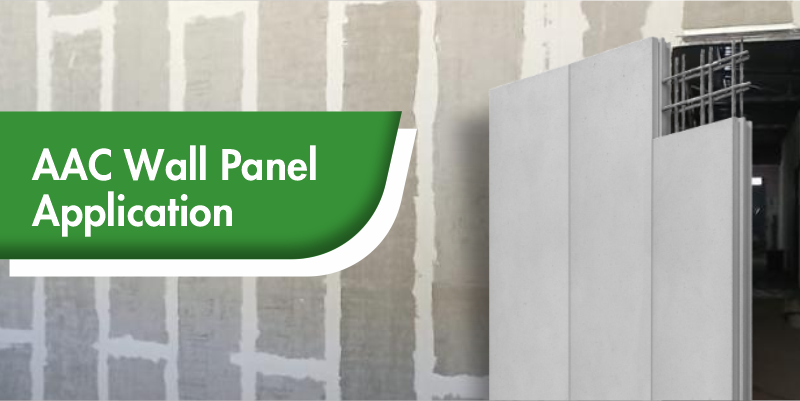
That is where AAC wall panel application is becoming a practical choice for many projects in India. These are large-format, factory-made, steel-reinforced panels that arrive on site ready for quick installation. Because they are lightweight, precise, and faster to install than traditional masonry, they are helping builders save time and reduce site work.
NXTBLOC is one of the companies leading this shift. Manufactured at a dedicated facility in Kheda, Gujarat, and certified to IS 6072, NXTBLOC wall panels are designed for use in residential, commercial, industrial, healthcare, educational, hospitality, and high-rise projects.
In this guide, we look at where AAC wall panels work best, how to choose the right thickness for each application, and why they are often a better fit than conventional wall systems.
What Are AAC Wall Panels?
AAC wall panels are factory made wall units made from autoclaved aerated concrete. They are produced using cement, lime, fly ash or sand, water, and a small amount of aluminium powder. During manufacturing, the aluminium creates air pockets inside the mix, which makes the material lightweight. The panels are then reinforced with steel mesh and cured in an autoclave under high pressure and temperature.
This process gives AAC wall panels a strong combination of low weight, thermal insulation, fire resistance, and dimensional accuracy. If you are new to the material, it helps to first understand what AAC blocks are, since the basic material is the same, even though the format is different.
NXTBLOC panels are designed to meet IS 6072 requirements and typically come in the following specifications:
Panel height: 8 to 12 ft.
Panel width: 2 ft.
Thickness range: 3 to 8 inches, or 75 to 200 mm.
Weight: about 70 kg per square metre, which is roughly 40 to 50 percent lighter than brick walls with plaster.
Reinforcement: double high strength steel wire mesh, ST50 grade, for better crack control and long span performance.
Joint system: tongue and groove design for easier alignment and less mortar at vertical joints.
Because the panels are made in a factory and arrive ready for installation, they reduce on site cutting, curing, and wet work. That helps speed up construction and makes site execution more predictable, especially when weather or labour availability is a concern. For builders comparing wall systems, it is also useful to see how to build walls using AAC blocks, because the installation logic is closely related.
AAC Wall Panel Application — Seven Sectors Where They Perform Best
AAC wall panels are no longer limited to niche or experimental projects. They are now being used across residential, commercial, industrial, institutional, and high-rise developments because they solve some of the biggest construction challenges today: speed, structural load, labour dependency, fire safety, and long-term building performance.
Unlike conventional brick masonry, AAC wall panels are factory-made, lightweight, and installed using a faster dry-type process. This allows projects to reduce construction timelines while improving thermal insulation, acoustic performance, and finish quality.
Different sectors use AAC wall panels differently depending on their operational and structural requirements. Residential projects focus on faster execution and thermal comfort. Commercial buildings prioritise carpet-area efficiency and flexible layouts. Industrial and healthcare projects require higher fire resistance and durability, while high-rise buildings benefit from lower dead load and structural savings.
The following sectors are where AAC wall panel systems deliver the strongest practical and economic advantages in modern construction.
Residential Buildings: Villas, Apartments, Housing Projects
AAC wall panels are a practical choice for villas, apartments, and housing projects because they help solve three common problems at once: faster construction, lower structural load, and better comfort for end users.
For internal partitions, 75 to 100 mm panels usually work well. For external non load bearing walls, 125 to 150 mm panels are a better fit. These thickness options make it easier to match the panel to the actual needs of the project without adding unnecessary weight or cost.
One of the biggest advantages is speed.
NXTBLOC type panels can be installed much faster than AAC block walls and far faster than conventional brick masonry. For developers working with RERA deadlines, that can make a real difference in keeping the project on schedule. If you are comparing wall materials for housing projects, the article on benefits of using AAC blocks in construction is worth reading.
There is also a structural benefit. Lighter walls reduce the load on columns and footings, which can help bring down concrete and steel use in multi-storey buildings. At the same time, AAC offers better thermal insulation than brick, which helps reduce heat gain inside homes and can improve comfort in Indian climates. If you want to compare these systems in more detail, AAC blocks vs red bricks is a useful reference.
Commercial Buildings: Offices, Malls, Showrooms
AAC wall panels are well suited for offices, malls, and showrooms where space use, noise control, and flexibility matter. In commercial projects, even a small gain in usable area can improve the value of each floor.
Slim partitions made from 75 to 100 mm panels take up less space than brick walls, which helps increase carpet area. They are also easier to modify when tenant layouts change, which is useful in buildings that may need future fit-outs or reconfigurations.
Another advantage is sound control. When installed and finished properly, AAC wall panel systems can help reduce noise between work areas, meeting rooms, and service spaces. That creates a better environment for both employees and visitors.
Because the panels are installed with less wet work and less mess, they also work well in phased commercial projects where parts of the building may already be occupied. The cleaner installation process helps reduce disruption and keeps the site easier to manage.
Industrial Buildings: Warehouses, Factories, Data Centres
Warehouses, factories, and data centres need wall systems that can move fast during construction and still perform well over time. These projects usually involve large spans, strict schedules, and important fire safety requirements, so the wall choice matters a lot.
For boundary walls and aisle separation, 150 mm panels are often a good fit. Where the walls need more strength, such as in factory partitions, machinery enclosures, or data centre barriers, 150 to 200 mm panels are usually more suitable.
Fire protection is one of the biggest concerns in industrial projects. When AAC wall panels are detailed and installed correctly, they can be used in fire rated wall assemblies with proper anchoring and finishes. They also handle wind exposure well when the structural design is planned properly.
Speed is another major advantage. Compared with conventional masonry, panel based wall construction can save a significant amount of time, which helps MEP and equipment teams begin work earlier. On projects where delays are expensive, that can make a real difference.
Healthcare Facilities: Hospitals, Clinics, Diagnostic Centres
Hospitals and healthcare buildings require high standards for hygiene, fire safety, acoustic control, and indoor air quality. AAC wall panels help meet these requirements efficiently.
100 mm panels are commonly used for internal partitions, while 125–150 mm panels are generally used for external and zoning walls.
AAC wall systems can provide up to 4-hour fire resistance, helping healthcare projects meet hospital fire safety and compartmentation requirements.
AAC is also an inorganic material, making it mould-free, pest-free, and non-combustible. Properly finished AAC walls produce zero VOC emissions, supporting cleaner indoor air quality in ICUs, operating theatres, and patient areas.
The factory-finished smooth surface of AAC panels reduces the need for heavy plastering before painting. This helps speed up finishing work and reduces construction time.
Properly sealed AAC wall systems also improve acoustic insulation between wards, corridors, equipment rooms, and treatment spaces.
Educational Institutions: Schools, Colleges, Universities
Schools, colleges, and universities often need construction work to fit into short breaks between terms. That makes speed a major advantage, especially when new classrooms, labs, or office wings have to be completed without disturbing the academic calendar.
For most educational buildings, 75 to 100 mm panels work well for internal partitions, while 125 to 150 mm panels are better for external walls or larger zoning walls. The right choice depends on the layout, noise control needs, and how much load the wall has to handle.
AAC wall panels also help create a quieter learning environment. When installed properly, they reduce sound transfer between classrooms, corridors, and activity areas, which can improve focus and teaching conditions. Better thermal performance is another benefit, especially in buildings that need to stay comfortable throughout the day.
The smooth factory finish also helps reduce plastering time, which is useful when projects have tight budgets and deadlines. That means less site work, less mess, and a faster move from construction to use.
Hospitality: Hotels, Resorts, Service Apartments
In hospitality construction, every week of delay is measurable lost revenue. Every square foot of wall thickness that can be reclaimed is rentable area. Every noise complaint from a guest is a review-platform risk. AAC wall panels address each of these directly.
Room-to-room sound insulation: Properly detailed partitions can achieve STC 44 dB, adequate for guest-room separation and corridor-to-room noise control. This reduces complaints about adjacent-room noise and equipment sounds from service corridors.
Slim-wall space efficiency: AAC panel partitions typically 100 to 125 mm for internal use are thinner than equivalent brick walls returning usable square footage to each room. Over a 200-room property the aggregate gain in revenue per square foot is meaningful.
Faster time-to-revenue: Minimal Cement-based site work and dry-type panel installation reduce handover periods to interior and MEP contractors. Hotels and resorts that open earlier recover construction finance costs faster and start generating revenue sooner.
Fire safety compliance: Well-detailed AAC wall assemblies support fire separation between public areas and guest rooms meeting hospitality-specific fire safety norms and simplifying inspection and certification timelines.
High-Rise Buildings: Multi-Storey Residential and Commercial Towers
Dead-load management is a central engineering challenge in high-rise construction. Every kilogram eliminated from non-structural wall systems propagates upward through structural design, reducing column sizes, beam depths and foundation volumes. This is where AAC wall panels deliver the most significant systemic benefit.
Weight comparison: NXTBLOC panels weigh approximately 70 kg per square metre compared to 180 to 200 kg per square metre for brick-based infill walls with plaster. At scale, this weight reduction can shift overall building mass by several percentage points.
Structural efficiency: Lower dead load also helps optimise the overall construction cost per square foot in India for high-rise residential and commercial towers by reducing concrete and steel consumption across the structure.
Height and reinforcement: Panels can be installed at heights up to 6 metres, covering standard floor-to-floor heights in towers. The double-layer ST50 wire mesh yield strength of 500 MPa, providing long-term crack resistance under wind loads and thermal stress cycles across the building’s service life.
Thickness selection must balance thermal performance, structural framing, acoustic requirements, on-site logistics and project budget.
Before selecting panel thickness for different applications, it is also useful to understand the standard AAC block sizes in India and how sizing impacts wall planning and execution.
Use the following practical reference for NXTBLOC-style systems across common application categories.
Application and recommended thickness:
Internal partitions in residential offices and schools: 75 to 100 mm
External non-load-bearing walls for apartment facades low-rise enclosures and industrial sheds: 125 to 150 mm
Industrial high wind-load and high-clearance zones including warehouses and data centre enclosures: 150 to 200 mm
NXTBLOC’s in-plant thickness range of 75 to 200 mm allows direct matching to these categories.
Why NXTBLOC Stands Apart?
NXTBLOC stands apart because it is built as a wall panel system from the start, not adapted from ordinary block construction. That difference matters on site because it changes the way the wall is installed, the speed of work, and the level of consistency project teams can expect.
Installation process
Step 1. Mark the wall line
The wall layout is marked clearly on the slab before work begins so the panel can be placed in the correct position.
Step 2. Prepare the base
Thin bed mortar is applied where needed to help the panel sit properly and stay aligned.
Step 3. Lift the panel into place
The panel is lifted and positioned against the structural frame with care.
Step 4. Lock the joints
The tongue and groove edges help the panels fit together neatly and reduce gaps between adjoining panels.
Step 5. Secure the panel
Metal clips and fasteners are used to hold the wall in position and provide structural stability.
Step 6. Continue panel by panel
The same process is repeated for the next panel so the wall line stays straight and consistent.
Step 7. Close the final gap
The last space is measured and cut to size so the wall closes neatly without unnecessary waste.
Step 8. Finish the wall
The joints are filled and the wall is prepared for finishing. Internal walls can receive skim coat finishing, while external walls are finished with AAC plastering mortar.
This process is one of the main reasons NXTBLOC stands apart. It combines factory precision with a faster site workflow, which helps reduce delays, improve coordination, and make walling less of a bottleneck. Because the panels arrive ready for installation and are more consistent than site-built walls, there is usually less rework and better control over quality.
NXTBLOC is also suited to a wide range of projects, including residential buildings, offices, warehouses, hospitals, and infrastructure work. For developers and contractors, that flexibility makes it easier to use the same walling approach across different project types while still keeping quality and speed under control.
Where AAC Wall Panels Should Not Be Used?
AAC wall panels are a strong solution for many projects, but they are not the right choice for every situation. To use them well, builders and consultants should also be clear about the limits of the system.
They should not be used as primary load bearing walls in high seismic buildings unless a structural engineer has specifically reviewed and approved the detailing. AAC wall panels are designed to work as infill or partition elements within an RCC or steel frame, not as the main load carrying structure.
They are also not ideal in very low temperature conditions or in areas with continuous moisture during installation and curing. If the site is too wet or the weather is not suitable, the mortar and joint performance can be affected. That is why installation should be planned for proper site conditions.
Another situation to avoid is a site where the structural frame is not yet complete. These panels are meant to span between finished frame members, so they should not be used before the RCC or steel structure is ready. When the system is used within its intended limits, it performs well and helps avoid problems later.
Stating these limits clearly is part of good specification practice. It helps project teams choose the right application, reduce risk, and avoid disputes after handover.
Conclusion
For builders and developers operating in India in 2026, AAC wall panel application is a mainstream construction decision. The material and system evidence is established, installation data is documented, and the structural and schedule logic is sound.
Across residential apartments, commercial offices, industrial warehouses, hospitals, schools, hotels, and high-rise towers, the value of correctly specified AAC wall panels comes from the alignment of three factors: the right panel thickness for the application, the right panel system for the structural context and the right project conditions for dry-type installation.
Bigbloc offers a standards-aligned factory-controlled high-speed wall panel system that can measurably shift project timelines, reduce structural costs, and improve the thermal and acoustic comfort that end-users experience over the building’s life.
If you are evaluating aerated concrete wall panel options for an Indian project in 2026, the decision framework is clear: specify by sector, select by thickness, and verify IS 6072 compliance before procurement.
Yes. 125 to 150 mm AAC wall panels are well suited for external non-load-bearing walls in Indian climates provided they are properly integrated with the RCC structural frame finished with weather-protective surface coatings and detailed for edge protection and water drainage at sill and jamb junctions.
For most residential and commercial internal partitions 75 to 100 mm panels provide the right balance of acoustic performance cost efficiency and space savings. They are light easy to handle and sufficient for normal airborne-noise separation requirements in apartments offices hotels and schools.
With an experienced prepared crew teams can typically achieve 10 plus square metres of panel installation per man-day. This is significantly faster than traditional brick masonry and generally faster than AAC-block thin-joint systems. Site preparedness level floor surfaces a plumb structural frame and pre-positioned panels are the primary variables that affect this figure.
AAC blocks are smaller brick-format units laid in masonry-style courses using mortar joints. AAC wall panels are large-format pre-manufactured slabs, typically 8 to 12 feet tall and 2 feet wide, installed as complete wall segments rather than individual units. Panels are faster to erect, lighter per square metre of wall area, and better suited to framed-structure applications. Blocks offer more flexibility for non-standard layouts and smaller infill areas where panel cutting would create significant wastage.